The first rehearsals have mostly consisted of table talk. We have utilized the screening room in Anna's apartment as rehearsal space, which is terribly convenient, since it's in the middle of town, and also contains several green chairs that can be arranged into several makeshift set ideas.
(The chairs are sometimes difficult to move, but they provide great exercise.)
We have arranged the chairs to form tight circles, and through a series of intellectual discussions, gotten to know each other, and the play.
The cast immediately began digging into concepts that never crossed my mind while I was writing the play. If you asked me if I was thinking about quantum mechanics and discussions of faith, and different definitions of anger and rationality when I was writing, I would have responded with a blank stare. Yet those are just two of the topics people discussed. (The title is a quote from that discussion.) These wonderful actors were finding things in my play that I didn't realize I had written about. From one perspective, this means they were completely off the mark. However, that isn't necessarily so. Personally, I love it when my work takes on a life of its own, especially when the new life is more complex and intricate than the original one. That's the true sign of a writer's success: when you can look at a text and extract your own profound meaning from it.
Then again, I might have written these things subconsciously. After all, we don't even recognize most of our insight. I don't do extensive research before I write anything, which could render me a terrible writer. (Although one person told me that people watching, which I do, is the best possible form of research. Thanks for that.) I don't pay attention to how things are structured, yet someone (again, thank you) just told me that 22 stories is structured beautifully. I don't believe that some people are naturally better writers and others, that writing is a skill that must be studied and practiced. Yet when I write, words come out, and how they come together surprised me as much as it surprises everyone else.
But where would these realizations be without the marvelous talent and good spirits of my actors? After all, they are the ones who come up with these ideas. They create valuable insights about their characters that I never considered, but fit like a glove. Juliette made the executive desicion that Natasha is someone who lies around her room naked, and Frank discovered that Darius was actually a dark, manipulative character, when I mostly intended him to be comic relief. Yet for some reason, I like his idea better than mine.
The real magic emerged from the improv sessions that Anna made the actors do. Everyone working in this play has great chemistry with each other, and that means everyone can easily talk to each other and learn off one another. We didn't cast our twins with the intent to make them look similar, yet they resemble twins more and more every day. Perhaps it's because they get along so well, you can feel the familial energy between them (manifested in conversations between the two CHARACTERS that went on for 45 minutes). We are all so wrapped up in this play that we don't realize what magic we're making. I can't wait for opening day.
Wait what's that? Opening day? As in, a specific date when it opens? Does that mean we have a venue? Next blog post, lovelies...

a new play by Sofia Johnson
Thursday, July 21, 2011

Monday, June 27, 2011
Auditions!
There is a saying that an actor can make a bad play good, a good play great, and a great play terrible.
That isn't saying that actors are everything. There are, of course, many different aspects to making a play great. There's the story, the voice of the characters, the poetry of the language, and the creativity of the direction. Nevertheless, an actor's performance is the first thing many people remember, and it can hence make or break the play.
I have to admit, I was not expecting a wide selection pool. I'm still having trouble with the realization that other people will (hopefully) see 22 stories that have no relation to me whatsoever. It's a great feeling, yet I still suspected that I would have to cast my friends in this show. We already cast Rachel Murdy for the adult roles that way (she's also a phenomenal actor). Besides, that's what my theatrical experience was used to. People hire the ones they are most comfortable with.
So imagine my surprise when I learn that 108 people in total signed up to audition - and I still got quite a few walk-ins.
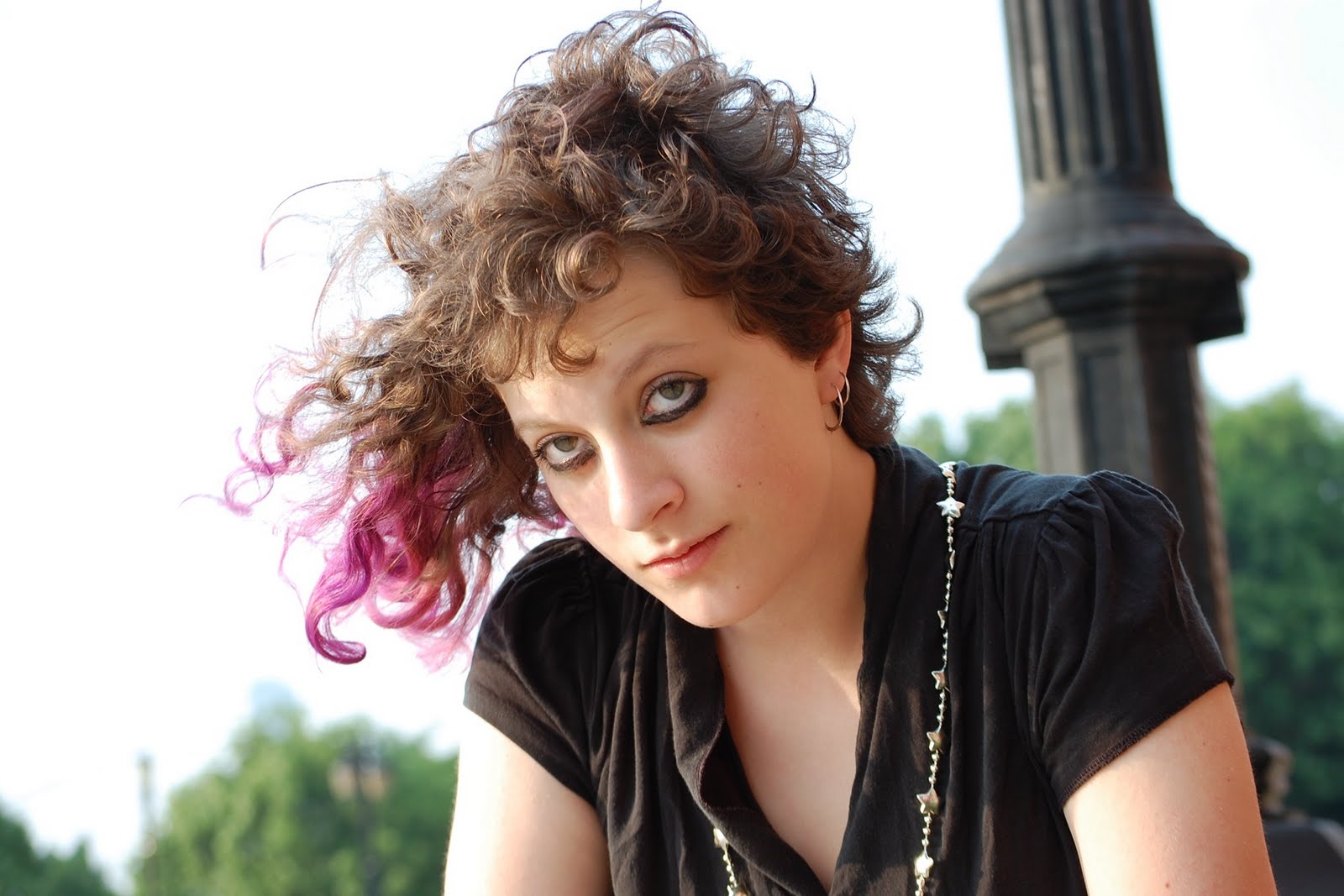
 The first round of auditions was an absolute blur in my mind. To be on the other end of the audition table for once was nothing short of surreal. There were all kinds of people, with all kinds of personalities for the same role. People auditioned for Nicole wearing lace dresses and pretty jewelery, as well as converse and orange fingernails. The whole experience felt like a giant whirlwind of people. (Note: If you are having general auditions, take notes on EVERYONE. Without notes, you will not remember a single name, even of the actors that blow you away.) I am so lucky to have the amazing Anna Foss Wilson (pictured) as the director - she is on top of absolutely everything.
The callbacks were much calmer. There were considerably fewer people to look at, and there was often a large time gap between auditions. (Some of the lines from the play are now permanently etched into my brain.) All the actors we called back were extremely talented, so I thought narrowing down the actors to one person would be an arduous task. Surprisingly, the decision was a pretty collective one. This is largely due to my big realization about casting:
Physicality is important when choosing a role. I always found it extremely superficial to cast a role based on an actor's appearance, but it carries much more legitimate weight than I thought. After all, I am casting twins. They have to look somewhat alike, or at least be the same height. If that doesn't happen, then the play turns out pretty unrealistic. Moreover, there are many other factors to consider when constructing an ensemble, like diversity and chemistry. Factors that I never thought about when seeing theater, but now become so much more apparent now that I'm finally on the other side of a script.
Note to the cast: you were all chosen for your excellent acting. You fit so well into each role that you almost don't even need to act. The read-through today was proof of that. I'm so excited for the upcoming rehearsals, and then the performances! (Which will remain a secret for how... hehehe)
That isn't saying that actors are everything. There are, of course, many different aspects to making a play great. There's the story, the voice of the characters, the poetry of the language, and the creativity of the direction. Nevertheless, an actor's performance is the first thing many people remember, and it can hence make or break the play.
I have to admit, I was not expecting a wide selection pool. I'm still having trouble with the realization that other people will (hopefully) see 22 stories that have no relation to me whatsoever. It's a great feeling, yet I still suspected that I would have to cast my friends in this show. We already cast Rachel Murdy for the adult roles that way (she's also a phenomenal actor). Besides, that's what my theatrical experience was used to. People hire the ones they are most comfortable with.
So imagine my surprise when I learn that 108 people in total signed up to audition - and I still got quite a few walk-ins.
The first round of auditions was an absolute blur in my mind. To be on the other end of the audition table for once was nothing short of surreal. There were all kinds of people, with all kinds of personalities for the same role. People auditioned for Nicole wearing lace dresses and pretty jewelery, as well as converse and orange fingernails. The whole experience felt like a giant whirlwind of people. (Note: If you are having general auditions, take notes on EVERYONE. Without notes, you will not remember a single name, even of the actors that blow you away.) I am so lucky to have the amazing Anna Foss Wilson (pictured) as the director - she is on top of absolutely everything. The callbacks were much calmer. There were considerably fewer people to look at, and there was often a large time gap between auditions. (Some of the lines from the play are now permanently etched into my brain.) All the actors we called back were extremely talented, so I thought narrowing down the actors to one person would be an arduous task. Surprisingly, the decision was a pretty collective one. This is largely due to my big realization about casting:
Physicality is important when choosing a role. I always found it extremely superficial to cast a role based on an actor's appearance, but it carries much more legitimate weight than I thought. After all, I am casting twins. They have to look somewhat alike, or at least be the same height. If that doesn't happen, then the play turns out pretty unrealistic. Moreover, there are many other factors to consider when constructing an ensemble, like diversity and chemistry. Factors that I never thought about when seeing theater, but now become so much more apparent now that I'm finally on the other side of a script.
Note to the cast: you were all chosen for your excellent acting. You fit so well into each role that you almost don't even need to act. The read-through today was proof of that. I'm so excited for the upcoming rehearsals, and then the performances! (Which will remain a secret for how... hehehe)
Thursday, June 9, 2011
Creative Team
Sofia Johnson saw her first play produced in 2002 -- when she was 8 years old – and she has been writing for the theater ever since. She has been honored numerous times on both the regional and the national level by Young Playwright’s Inc., and her plays have been produced in the Young Playwrights Inc. Advanced Playwriting Workshop, Manhattan Theater Source’s Estrogenius Festival, Writopia Lab’s Best Playwrights’ Festival, and at the Brooklyn Arts Exchange. In addition, several of her short stories have been honored with the Scholastic Art & Writing Gold Key award. She has studied writing at the Sewanee Young Writers’ Conference, Writopia Lab, and Young Playwright’s Inc. She made her professional acting debut as a Maypole Dancer in Manhattan Theatre Club’s production of Alan Ayckbourn’s HOUSE & GARDEN. In the fall, Sofia will be a senior at Bard High School Early College in New York City.
Sofia’s association with Anna Foss Wilson began when they appeared in a play together at the 2006 Estrogenius Festival. Since then, they have collaborated on several projects for Little Theater at The New Dixon Place. Sofia is delighted to have Anna direct 22 STORIES.

Anna Foss Wilson was a co-founding member of Diane Paulus's Project 400 Theater Group from 1997-2007. In the first ever New York International Fringe Festival their show, BARON OF LUFV, won best musical, and she is pleased to be participating again with the Festival in its fourteenth year. With P400, Anna created leads in THE DONKEY SHOW (7-year Off-Broadway run / 1-year tour in Europe), SWIMMING WITH WATERMELONS, THE KARAOKE SHOW, and MEASURE FOR MEASURE. Also with P400, Anna devised original musicals with residents of the Lower East Side and taught theater workshops to teens and undergrads at Mike Nichol’s School and Children’s Theatre Company of Minneapolis. In addition to acting, Anna has been directing various shows for FNDo it Productions. In the past three years Anna has formed an LLC to teach film acting, Create Urlife, with partner Tom Brangle. Anna is thrilled to be directing Sofia Johnson's 22 STORIES for this year's Fringe.
Monday, June 6, 2011
Excerpt from 22 STORIES

NICOLE
It suddenly strikes me how small everything truly is. The cars look like meager pushpins, and the people walking into them look even smaller than that. (LAUGHS) Of course, if Natasha heard that description, she would scoff at me. According to her, I only speak in clichés. I possess no originality. Originality and creativity and freedom of thought are all disintegrating before our very eyes, and we can’t even realize this because we’re too focused on our inane self-satisfaction, which is turning us completely homogenous, and -- sorry. This is actually how she speaks. Spoke. I mean, it’s not like she’s going to have the opportunity to chastise me or my lack of creativity again.

NATASHA
What do those school tests really teach you, huh? What do they test you for? Whether or not you can follow rules. No respect for how smart a person actually is whatsoever. In fact, I bet the people who created those tests are trying to make everyone stupider, so they can keep us under the government's control, and become good little citizens who are oblivious to their world around them. Our humanity is being ruined, Nikki! Can't you see? Why should we have to care about this dumb test anyhow? It doesn't teach us anything, except that we need to be submissive to the system, and that's just stupid! I am a person, and people need to be free thinkers.
NICOLE
I did my homework during lunch, and then I did further research on my parent's computer as soon as I got home. Natasha, on the other hand, began spending all of her time around her new nonconformist friends, and whatever poem she was currently working on. And we only became more different from there. I got glasses; Natasha pierced her left eyebrow. I took an NYU course in mathematics for teens each summer; Natasha started cutting school to do God-knows-what with her friends. My fingernails are bitten into some nonexistent dimension; Natasha's were long, pointy, and always painted black. I make sure to set my bedtime for 9:00 every day so I can get a sufficient amount of sleep; just a week ago, I heard Natasha come into her room at 4:29 in the morning. And for the life of me, I can’t remember the last time I hugged my twin sister.
Subscribe to:
Posts (Atom)